


The archive · where the idea began
The birth of VinoTron.
Before the compact device, the dual modes, and the music-reactive choreography, there were prototypes — glass vessels, pumps, handmade housings, nozzle experiments, and a fascination with making wine move.
This page preserves the visual language and early media of the original VinoTron website while telling the story through the lens of what the project became.
The spark
Engineering met art.
The earliest VinoTron concept was not simply about aeration. It was about turning a familiar ritual into an engineered performance. The original site described inspiration drawn from nature, theatrical fountains, and the idea that fluid dynamics could be choreographed instead of hidden.
That mindset became the project’s DNA: build the mechanism carefully, then make the mechanism disappear behind the experience.
The first machines
Make the wine move.
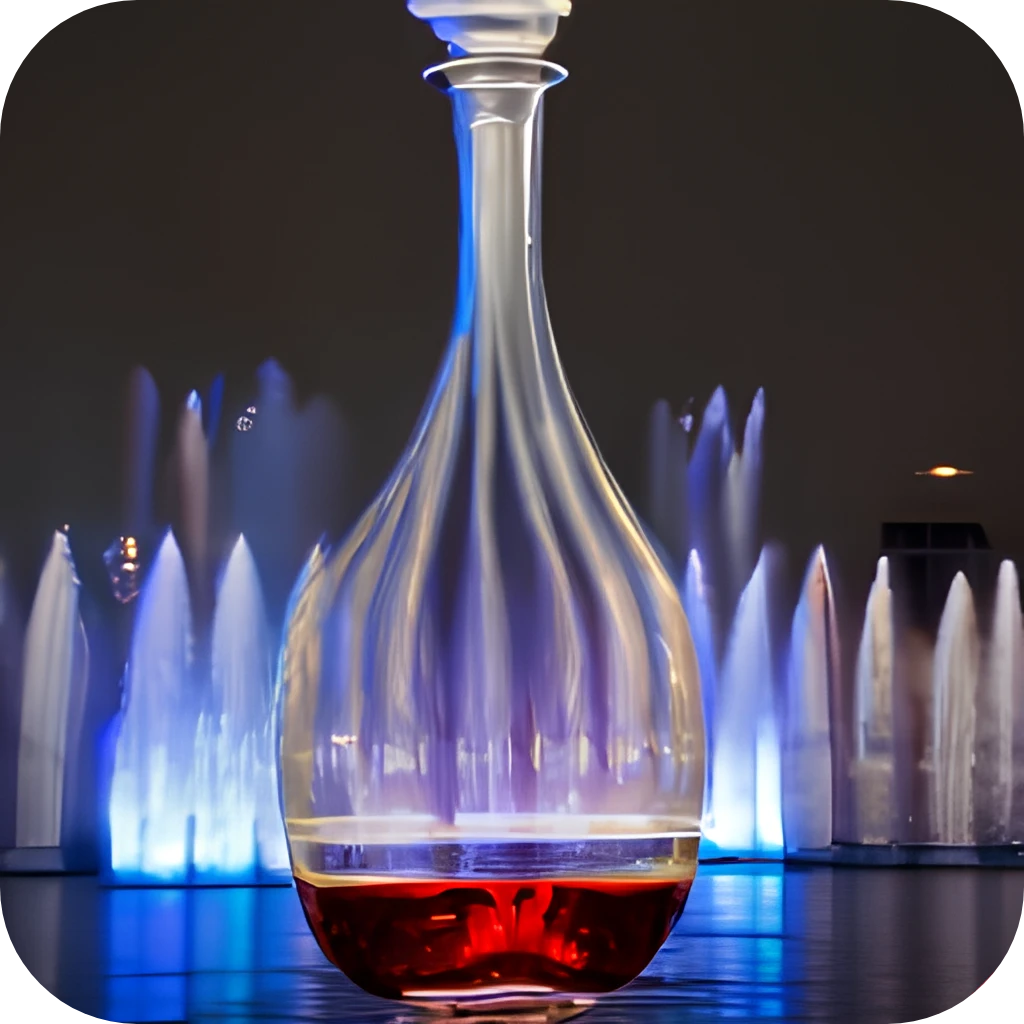
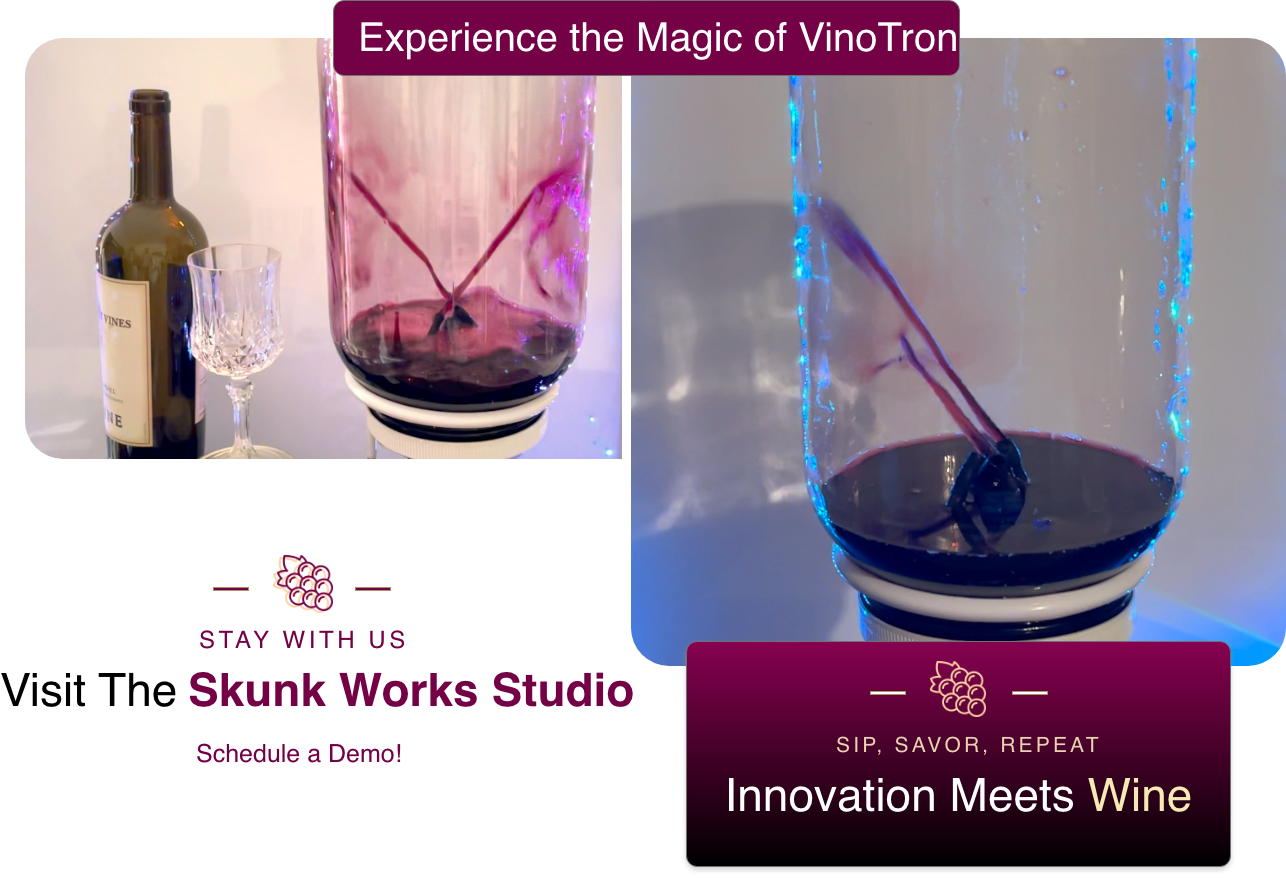
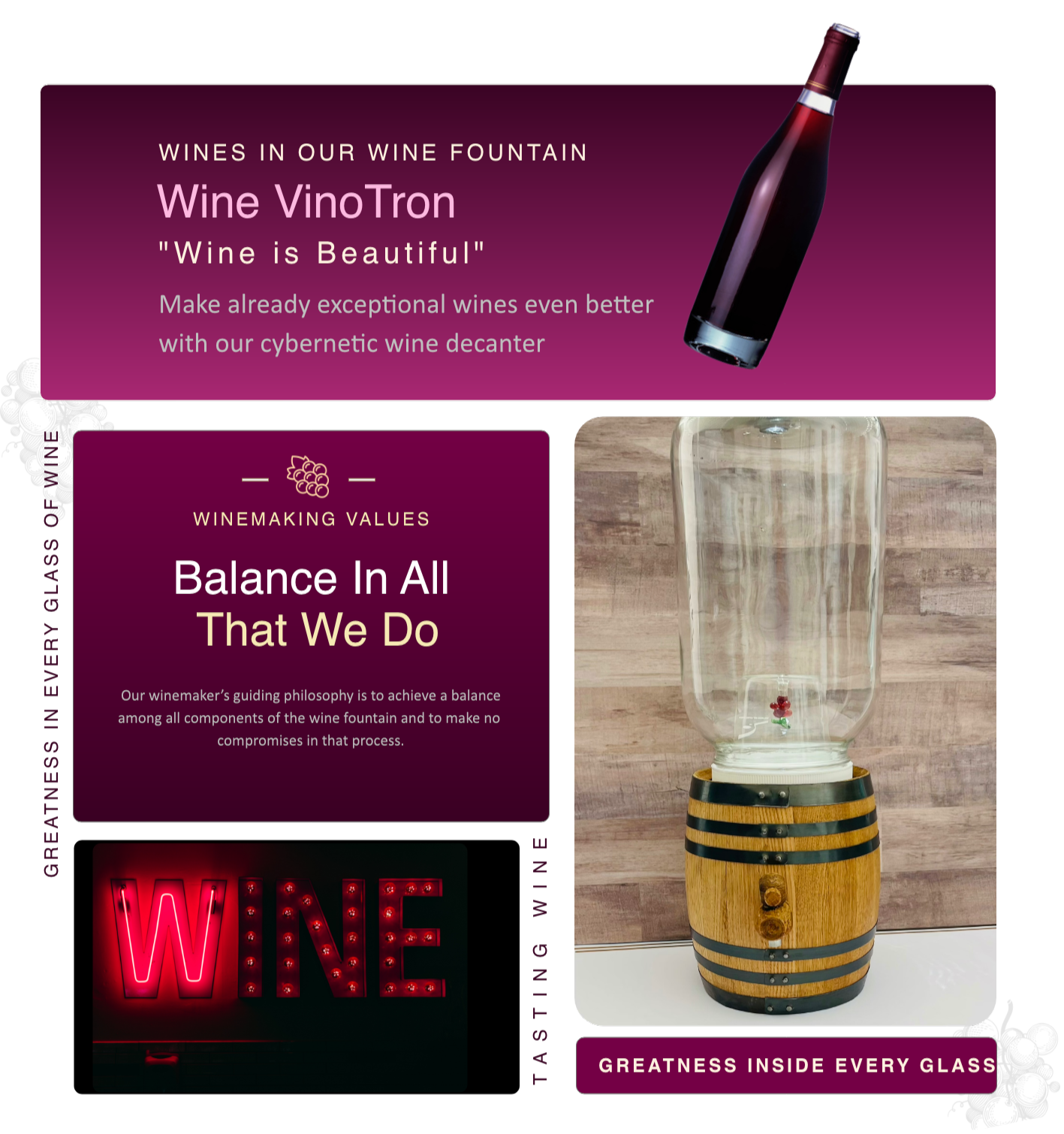
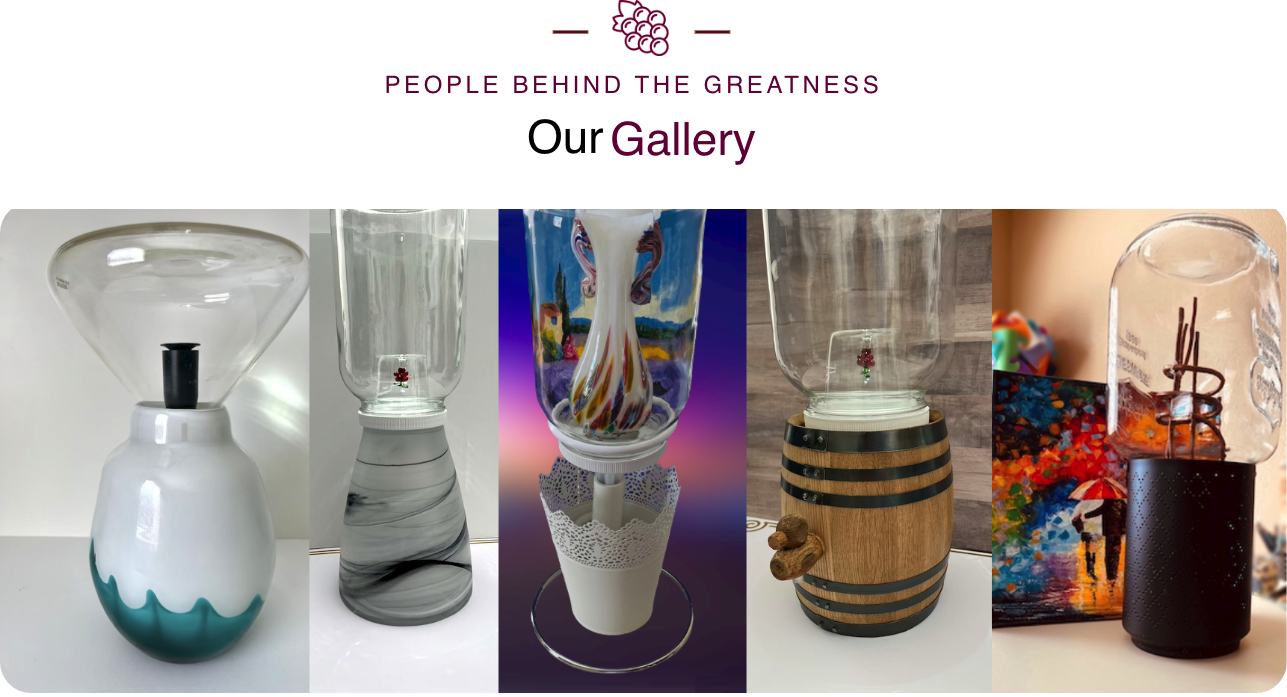
Early builds were visibly experimental: larger bases, hand-fabricated housings, unconventional glassware, and exposed proof-of-concept hardware. They were not trying to look like the final product. They were trying to answer the harder question — could a controlled wine show actually work inside the vessel?
Those prototypes established the core idea that still survives today: the liquid itself should be the visual centerpiece.
Orchestrated motion
From routine to choreography.
The original vision already treated the fountain like an instrument: flow could be tuned, programmed, and timed. That idea eventually evolved into one of VinoTron’s strongest differentiators — autonomous response to music and surrounding sound.
What began as programmable fountain behavior became the modern promise: your soundtrack becomes the choreography.
The vision expands
More than a fountain.
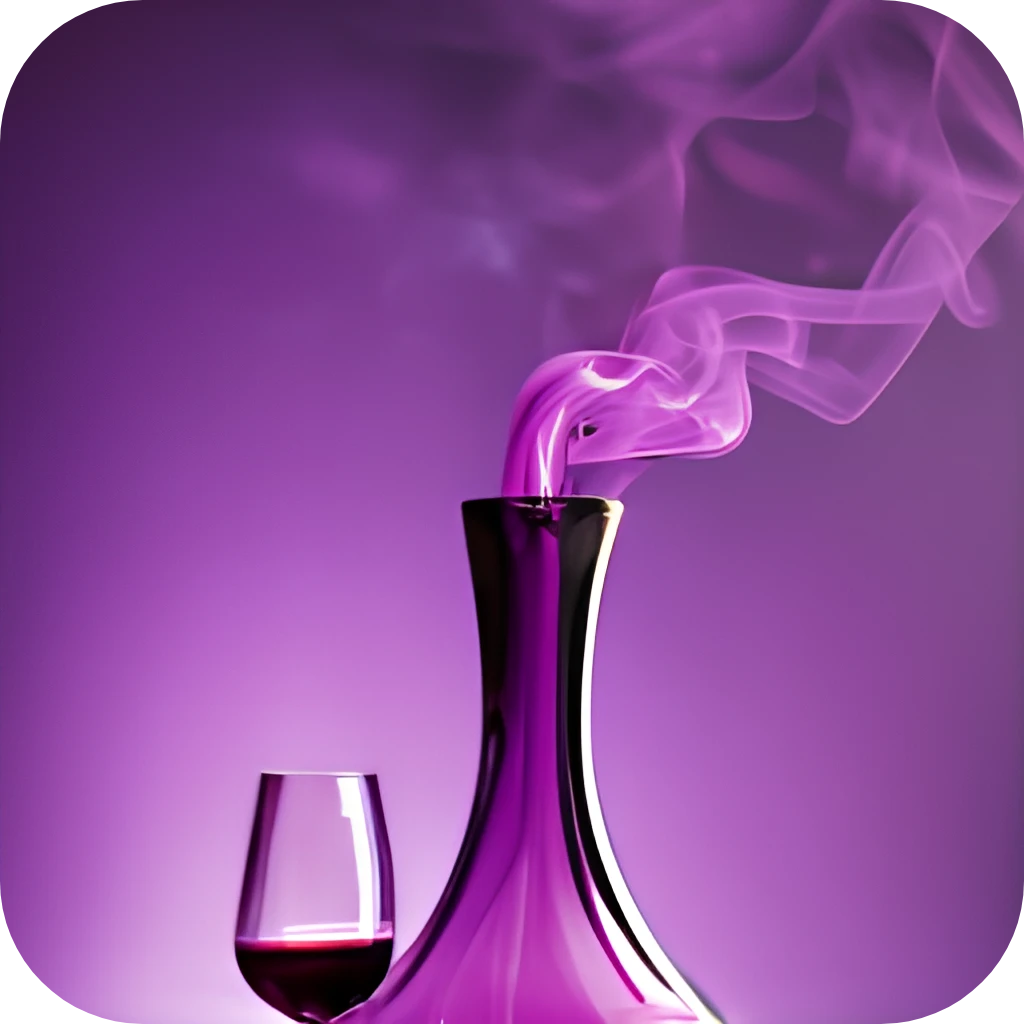
Even the first website looked beyond spectacle. It explored aroma, vapor, material compatibility, and the sensory state of the drink. The concept was already reaching toward something broader than a conventional decanter accessory.
Today that broader idea is expressed through one compact platform with two experiences: Performance Mode in the decanter and Immersion Mode in the glass.
Original website archive
A project learning its shape.
The old gallery is valuable precisely because it is not polished. It shows the project changing form as the engineering, industrial design, and experience matured.
Then → now
The experiment became an experience.
The forms changed. The device became smaller. The storytelling became more refined. But the original instinct remained intact: combine engineering, wine, motion, music, and a little bit of theater to create something people have not experienced at the table before.
See VinoTron today